

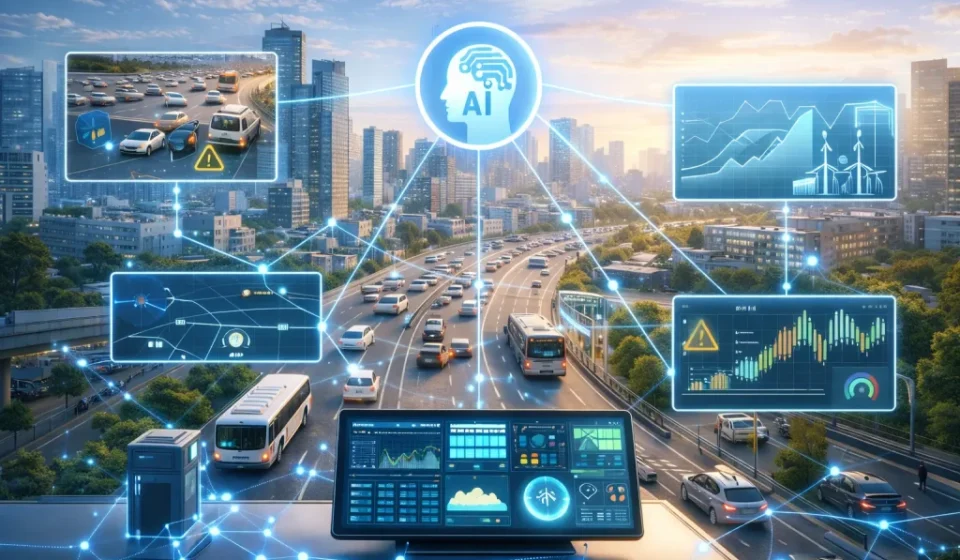

AI In Smart Traffic Management
AI In Smart Traffic Management allows cities to control vehicles in a more efficient way, reduce congestion and increase safety. As cities continue to grow, traditional traffic systems are becoming less effective. Artificial intelligence is being used to create smarter transport networks that allow cities to analyse traffic data, identify issues on the roads and predict any potential accidents.
AI in Smart Traffic Management What Is AI In Smart Traffic Management?
AI In Smart Traffic Management uses artificial intelligence, machine learning, cameras, sensors and connectivity to monitor and control traffic. These advanced systems gather data from roads, vehicles, traffic lights and surveillance.
These systems can analyse large amounts of data. Intelligent decisions can be made such as identifying busy roads, strange vehicle activity and adjusting traffic lights. This helps transport authorities to gain an insight into traffic patterns and make better decisions. Overall, this helps improve road efficiency.
AI in Smart Traffic Management How AI Can Help Improve Traffic Management
There are many benefits to using AI for modern transport:
Real-Time Data
AI enabled cameras and sensors constantly monitor roads and motorways. They gather data such as vehicle speeds, congestion, road conditions and vehicle density.
This can easily identify any issues causing congestion. Transport authorities will be able to respond to any new issues.
Reduces Congestion
Congestion is a big issue for many large cities. It can cause delays, increased fuel usage and create pollution.
AI can analyse traffic patterns and automatically adjust traffic lights. If there is a lot of traffic on one road, the smart traffic lights can give more green light time.
This can help reduce waiting times.
Detect Accidents
Accidents on roads are a big issue. AI can analyse camera footage, vehicle movements and road conditions to predict any potential accidents.
Intelligent monitoring systems can detect any accidents and alert emergency services. This can help get them to the area quicker.
AI can also warn of any dangerous driving patterns to help improve road safety.
AI in Smart Traffic Management How AI Helps Create Smart Cities
Smart cities use connectivity to improve our lives. AI is becoming increasingly important as it can connect transport with digital systems.
AI can be used with smart traffic lights, public transport, parking systems and road monitoring. All of these systems can share data to help improve transport.
AI can help city planners understand how people travel and which roads need improving. By analysing transport data they can create better road networks and more efficient public transport.
Intelligent transport can help create modern and sustainable cities.
Benefits of AI-Enabled Transport
There are many benefits to having AI enabled traffic systems.
More Efficient Traffic
AI can analyse road conditions and adjust traffic lights to allow vehicles to move more efficiently.
Less Fuel Usage
If vehicles aren’t stuck in traffic, they will use less fuel. This may help reduce carbon emissions.
Faster Emergency Response
AI enabled monitoring systems can detect accidents and alert emergency services. This can help ambulances and rescue teams get to the area quicker.
Smart Public Transport
AI can analyse passenger demand, traffic and transport times. This can help improve public transport.
Challenges of AI in Traffic
Whilst there are many benefits to using AI, there are also some challenges.
It can be very expensive to set up smart cameras, sensors, connectivity and advanced traffic control systems. This can leave smaller cities unable to afford them.
There are also key data privacy and security issues when gathering traffic data. Authorities must ensure personal data is protected.
AI systems need accurate data and continual maintenance. If data isn’t good, then predictions will be incorrect and traffic decisions won’t be efficient.
However, with constant improvements in technology, these issues can beovercome.
The Future Of AI In Smart Traffic Management
The future looks promising for AI In Smart Traffic Management. This will come with improvements in AI, 5G, IoT and self-driving cars.
Future transport networks may include AI to predict congestion. Connected vehicles can talk to traffic lights to share data.
Intelligent transport may help self-driving cars drive more safely and efficiently.
With cities investing in their digital systems, AI enabled traffic management may become a key element of urban transport.
Conclusion
AI is changing the future of transport. Using AI In Smart Traffic Management allows roads to become smarter, safer and more efficient. From real time data, detecting accidents and reducing congestion, artificial intelligence can provide great solutions to modern transport issues.
Although there are some key issues to consider with the cost of implementing, data privacy and security, the benefits in the long run are significant. With continual innovation, AI-enabled transport can help create smart cities.