

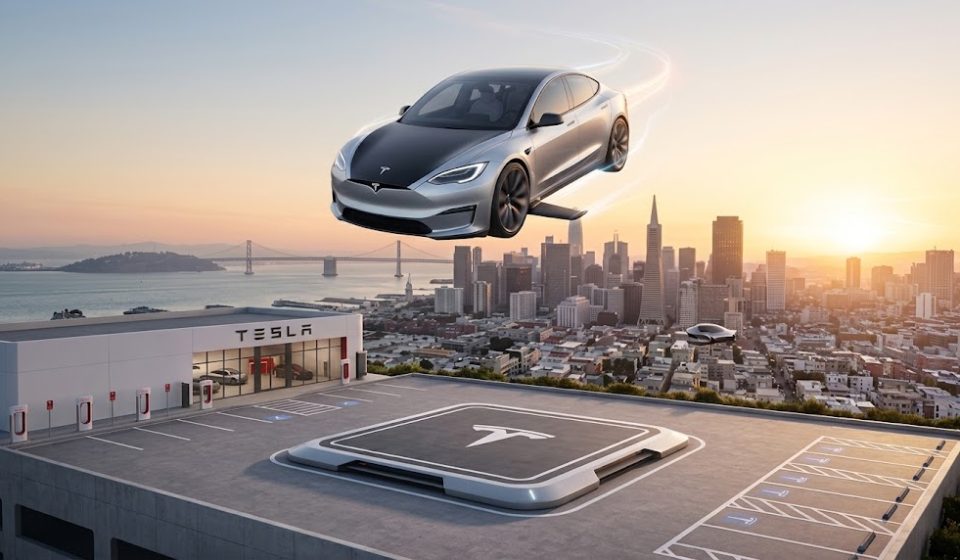

Tesla Flying Car – Design, Features & Technology
This vehicle provides us with an exciting insight into the future of transportation. It combines electric vehicles with some advanced engineering to create an innovative vehicle that would be able to fly over busy roads. This futuristic idea has caught the attention of many tech, car and future transport lovers.Tesla have become well-known for their electric vehicle, battery techology and autonomous driving research led by Elon Musk. In October 2026 Tesla showcased their new Roadster with a rocket assisted flying design. While this technology is still being developed, it has sparked new conversations around the future of personal transport.
Tesla Flying Car Design & Style
Overall this vehicle has a modern, futuristic design. The illustration below shows a sleek vehicle with stylish headlights, a panoramic glass roof and aerodynamic design.The sleek design illustrates how vehicles could be designed in the future with luxury electric vehicles and advanced aerospace technology.
Tesla Flying Car Modern & Aerodynamic Design
This vehicle has an aerodynamic design. This can help reduce air resistance. Vehicles in the future may need to use light materials, advanced engineering and aerodynamic features.
Luxurious Interior
In the future this vehicle may have a luxurious interior with comfortable seats
Tesla Flying Car Technology & Innovation
Technology would play a key role in creating vehicles that can fly. With Tesla having experience with electric drivetrains, software and engineering they could help bring innovation to the future of transport.
The new Roadster design shows how vehicles could combine engineering and aerospace.
Tesla Flying Car Electric Drivetrain & Batteries
Electric vehicles are an important part of modern transport. Tesla have created vehicles that run on batteries to ensure they perform efficiently and reduce reliance on traditional fuel driven engines.In the future vehicles may run on advanced battery systems or other propultion systems. However, flying vehicles would require a lot of energy, meaning battery size, weight and efficiency will be key factors.
Tesla Flying Car Advanced Controls & Flight Systems
To fly this vehicle would require advanced controls. Sensors, computers and navigation systems could help control various aspects of the flight.
Performance & Speed
One of the most interesting aspects of this vehicle is the performance.The new Roadster showcased in October 2026 included rocket assisted movement and impressive mid-air tricks. Elon Musk discussed how fast this vehicle could go with incredibly quick acceleration.However, this does not confirm that a standard passenger sedans can fly over cities.
Fast Travel
Flying vehicles could provide alternative means of transport between certain locations. In the future vehicles may help reduce travel times.However, this would depend on the speeds, range, passenger capacity and energy consumption.
Safety
Safety would be an important factor. This vehicle would require reliable navigation systems, emergency systems, stable controls and strong protection.Engineers would need to consider the weather, landing facilities and air traffic control.
Smart Features
Smart technology could play an important role in future flying vehicles.
Features could include:
Advanced Navigation Systems
Voice Controlled
Intelligent Safety Systems
Live Traffic Updates
Auto Assistance
Smart Connectivity & Entertainment
Smart Displays for Drivers & Passengers
These features are just some ideas for future vehicles and do not confirm what the Tesla below will have.
Cost & Release Date
Cost and release dates are important when considering the future of transport.Tesla have not confirmed the cost or release date for this flying sedan.The new Roadster is a separate project. Tesla have showed off their rocket assisted technology however, they have discussed production for 2028. Final specs, availability and approval will be key.Do not rely on concept images and estimated prices online.
Advantages
Flying vehicles could provide some interesting opportunities. They could provide alternative transport in areas with lots of congestion, they could utilise new methods of clean transport with future electric drivetrains and they could provide more convenience with advanced navigation and automation.However, this will depend on the technology, infrastructure, cost and safety regulations.
Disadvantages
While this may sound exciting there are a few disadvantages to consider. Battery weight, energy consumption, safety and cost of manufacture may make this difficult to develop. The Government would need to set clear rules and requirments for aircraft.Noise pollution, weather, emergency landing facilities and air traffic control would need to be considered.This is why we do not currently have futuristic flying transport as part of our daily lives.
Conclusion – Future of Technology
The future of Tesla Flying Car technology could become an interesting aspect for the automotive and aerospace industry. With Tesla developing electric vehicles and showcasing their new Roadster we can see how automotive engineering can think outside the box. While the image below is not a confirmed production sedan, it is an exciting idea for the future of mobility.With technology continuing to develop, battery systems, smart software, aerospace engineering and vehicle safety could change the future of transport.
Final Thoughts
Overall the Tesla Flying Car concept provides an exciting look into the future of transport. With the futuristic design, advanced technology and link to electric vehicle innovation it makes an interesting topic for tech lovers. However, this would require a lot of engineering, testing and approval. The Roadster is an important development to keep an eye on however, the flying sedan is just a futuristic concept.